
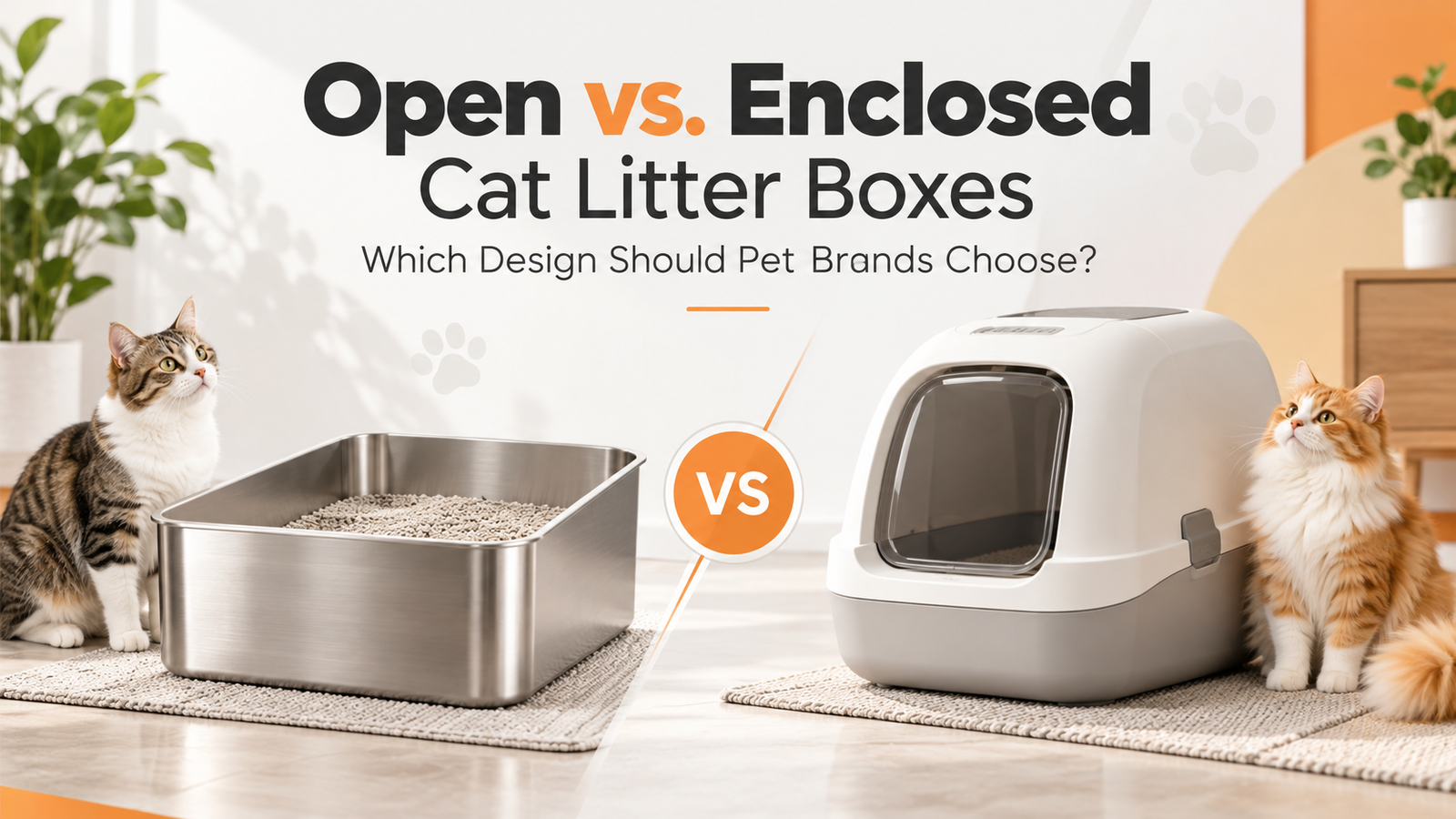

Choosing between an open and an enclosed cat litter box sounds simple—until a customer asks whether the entrance is comfortable for an older cat, how long it takes to clean, or why litter still ends up on the floor. For pet brands and distributors, those questions matter as much as the product’s appearance. A good range needs to make sense for the cats using it and the people maintaining it.
This guide compares open and enclosed designs without assuming that either is best for every household. It also explains what B2B buyers should check before selecting models for a private-label or wholesale program.
Open vs. Enclosed Cat Litter Boxes: The Main Differences
An open-top litter box leaves the area above the tray unobstructed. A covered or enclosed litter box adds walls, a hood, or a more complete housing. The choice affects access, visibility, cleaning, litter containment and how the product fits into a home.
| Buying consideration | Open-top design | Enclosed design |
|---|---|---|
| Access and visibility | Easy to see and enter when the sides or entrance are suitable. | Entrance size, door and internal clearance need closer checking. |
| Daily cleaning | Waste is usually easy to see and reach. | May require removing a hood, opening a door or pulling out a tray. |
| Litter scatter | High sides or shields can help; an open top alone does not prevent tracking. | Walls and covers may contain some scatter; loose litter can still leave on paws. |
| Cat preference | Suitable for cats that prefer an unobstructed view or easy escape route. | May suit cats that accept a more sheltered space; not every cat likes covers. |
| Retail presentation | Simple format, clear dimensions and visible material finish. | More opportunities for furniture-style and decorative positioning. |
| Shipping and parts | Often a simpler assembly, but packed size still matters. | Check hood fit, hinges, doors, fasteners and replacement parts. |
1. When an Open-Top Cat Litter Box Makes Sense
Open designs are worth considering when easy access and a clear, unobstructed space are priorities. Owners can usually see when the box needs attention, and cats do not have to pass through a flap or narrow doorway. That can be particularly useful when evaluating options for kittens, larger cats or cats with reduced mobility—provided the entry height and usable floor area are appropriate.
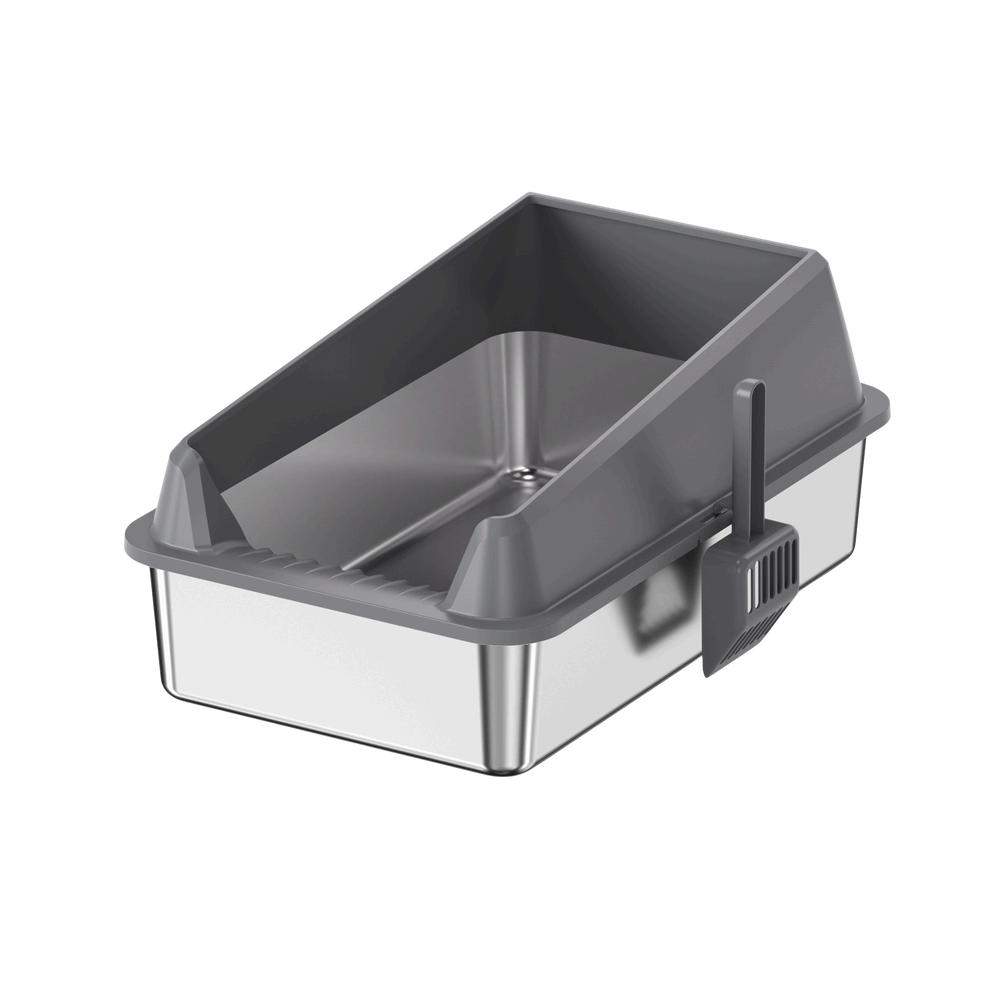
However, an open box is not automatically suitable for every cat. A very high front edge can make access harder, while a very low surround may allow litter to be kicked out. A buyer should evaluate the combination of entry geometry, wall height and internal floor space rather than judging from a front-view product photo.
For a closer look at available configurations, browse our open cat litter box collection.
2. What an Enclosed Cat Litter Box Does—and Does Not—Solve
Covered designs can create a more sheltered space and can help limit litter kicked beyond the tray walls. They also give brands more room to differentiate products through shapes, panels and integrated accessories.

The trade-off is that a cover changes the cat’s sightlines and the owner’s access during cleaning. Some cats tolerate enclosed spaces well; others may avoid them. Covered boxes also should not be advertised as “odor-free.” Odor depends on waste removal, litter, airflow, surface condition and upkeep. A lid is not a substitute for cleaning.
When evaluating an enclosed cat litter box, ask to inspect the entrance opening, ventilation path, interior corners and how quickly the cover can be removed and refitted.
3. Look Beyond the Shape: Drawer and Furniture-Style Options
Within the enclosed category, the cleaning mechanism and exterior presentation can be just as important as the cover itself.
Drawer-style litter boxes
A pull-out base may let an owner access waste without lifting the entire housing. It can also introduce runners, seals and contact points that need to remain easy to clean. During sample approval, check whether the drawer slides smoothly, how litter behaves near the gap and whether all soiled surfaces are reachable.
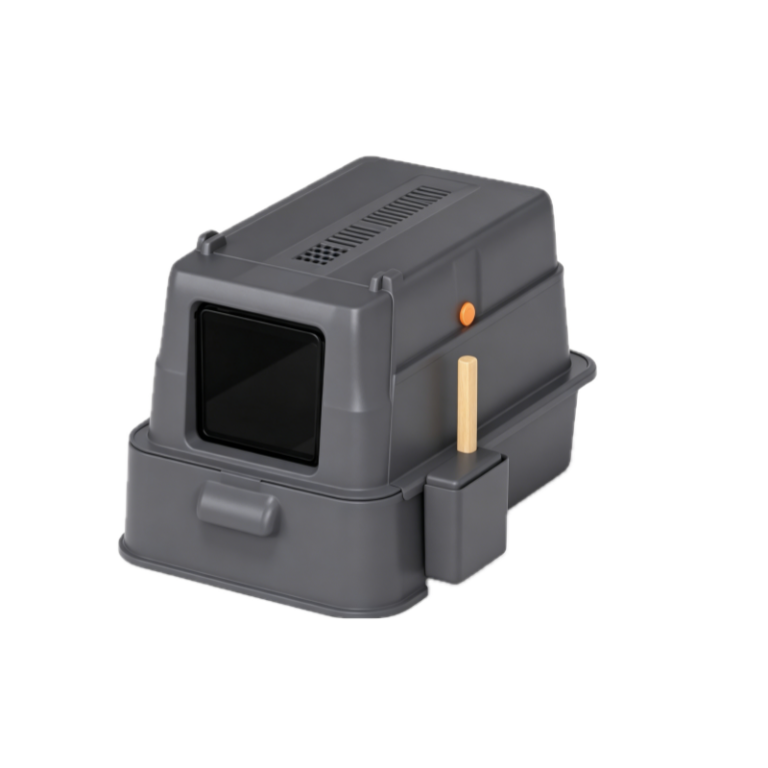
Explore drawer-style enclosed litter boxes if a slide-out cleaning approach fits your range.
Potted-plant and decorative designs
Decorative housings can appeal to customers who want a litter box to blend into a living room. But the first test is still whether the cat has adequate usable space and whether the entire interior can be reached during cleaning. An attractive exterior does not compensate for an awkward entrance.

4. Size and Entry Height Matter More Than a Trend
Whichever style you choose, usable dimensions should come before marketing language. Cat-care guidance commonly recommends a litter tray measuring approximately 1.5 times the cat’s body length as a starting point, while recognizing that individual needs differ. Measure the available internal floor—not just the outside of the carton or housing.
For an OEM specification, request these dimensions separately:
- External length, width and height, including any removable hood.
- Clear internal floor length and width at the usable base.
- Height and width of the actual entry opening.
- Clear interior height for turning and changing posture.
- Finished edges, corner radii and places where damp litter might collect.
If your customer group includes senior cats or cats with mobility limitations, evaluate a lower-entry option rather than making broad “suitable for every cat” claims. TICA’s litter box guidance discusses why box size and easy access matter.
5. Materials and Cleaning: Check the Finished Product
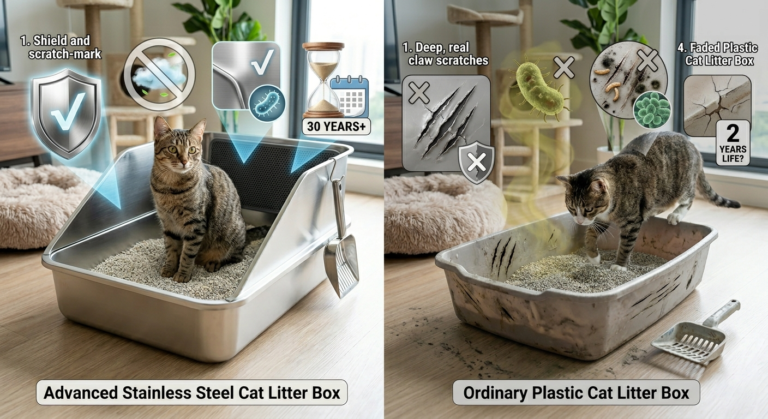
Stainless steel is one available material for open and enclosed boxes, and its smooth surface can support straightforward wiping and rinsing. But the finished item’s cleanability also depends on seams, coating, removable shields, fasteners and the way the base joins other parts. Plastic and mixed-material designs deserve the same practical assessment.
For buyers comparing stainless steel models, our stainless steel litter box design guide covers specifications that are useful when reviewing drawings and samples.
6. A Practical Sample Checklist for Wholesale Buyers
Before placing a bulk order, ask the supplier for a sample representing the intended production materials and configuration. A simple, repeatable review is more valuable than a long list of unverified claims.
- Observe access. Verify doorway dimensions, step height and clear internal space.
- Simulate routine cleaning. Scoop, empty, wash, rinse, dry and reassemble the box according to the proposed user instructions.
- Inspect contact surfaces. Check corners, seams, edge finish, detachable parts and any drawer mechanism.
- Check containment realistically. Review wall height, shield fit and possible exit paths for litter; do not promise that tracking will disappear.
- Review the final packaging. Confirm carton dimensions, protective inserts, assembly instructions and the risk of shipping damage.
- Document the agreed standard. Record acceptable finish, dimensions, functionality, labeling and inspection criteria before the production run.
If you sell under your own brand, also confirm which logo, color, packaging, accessory and manual options are available for the selected SKU. MOQ, lead time and configuration feasibility should be quoted by model—not assumed for the entire catalog.
7. How to Build a Balanced Cat Litter Box Product Range
For many retailers, the more useful question is not “Which one design will win?” but “Which two or three designs serve distinct customer needs?” A starter range might include an accessible open-top model, an enclosed model focused on litter containment and an optional premium decorative or drawer-style design. The exact mix should follow your market, price position and customer feedback.
For importers, distributors and private-label brands, compare the available wholesale cat litter box solutions before choosing which models to sample.
Frequently Asked Questions
Are enclosed litter boxes better at controlling odor?
Not necessarily. A cover changes the airflow and may hide waste from view, but regular waste removal, litter choice and thorough cleaning remain important. Avoid “odor-proof” claims without relevant product-specific evidence.
Which type is better for large or senior cats?
Look first at usable internal size and easy access. A spacious open box with a suitably low entry may be easier for some cats, while a well-designed enclosed model can also work. Individual preferences and mobility needs matter.
Are stainless steel litter boxes always easier to clean?
No material guarantees an easy-clean product. Smooth surfaces can help, but seams, joints, corners and removable components can make a substantial difference.
Can a pet brand order private-label cat litter boxes?
Yes, customization may include branding, packaging and accessories, depending on the model and project scope. Confirm exact specifications, sample availability, order quantity and production requirements with the supplier.
Final Takeaway: Choose for the Cat, Then Validate for the Channel
Open-top boxes offer clear access and simple daily visibility. Enclosed boxes offer a different balance of containment, shelter and retail presentation. Neither design should be treated as universally superior. For a successful product range, combine cat-centered dimensions with practical cleaning tests, a clear specification and packaging that suits your sales channel.
Planning an OEM/ODM or wholesale project? Browse the Younihao product catalog or contact our team with your target market, preferred style, expected quantity and customization brief.
Cat-care reference: The International Cat Association (TICA), Five Steps to Purrrfect Your Litter Box Setup. Product images in this guide are from Younihao’s own website and illustrate available design formats; model specifications must be checked individually.

Leave a Reply